
The Art of Boxing
Recently, I watched a couple of boxing matches on YouTube: a two-part series between Tyson “The Gypsy King” Fury and Oleksandyr “The Cat” Usyk. I was still mulling over the fights for several days afterwards. I kept thinking about how captivated I was watching the bouts. From beginning to end, I was entranced, not pondering anything else for the entire hour each fight lasted. The lights, the fast-paced action, and the starkly contrasting personalities of Fury and Usyk were captivating, as if I were watching an elaborate Broadway musical.
These men were the pinnacles of fighting prowess, dodging and throwing punches so effortlessly that they almost seemed choreographed. I went through every range of emotion humanly possible watching them go at it - ecstatic joy at seeing a perfect combination performed at various times by both men, gut-busting laughter at Fury’s gadfly-like sense of humor, and tearful solidarity at Usyk’s dedication of his victories to his family.
It got me thinking: boxing is much like theater. Both require intense dedication, a unique set of skills, and a marketable persona that will get people’s attention. The added factor of both requiring live performances makes the similarities rather uncanny.
For some, I imagine, it can be a bit difficult to see parallels, especially with boxing exhibiting real violence. Despite that, and if you look past it and see the greater scope of work surrounding both professions, it actually isn’t hard to see the similarities at all.
Boxers and actors must be trained at an established institution. Boxers can get their start at local USA Boxing-sanctioned gyms, while actors are trained at established acting institutions or universities with drama majors (though some have gotten their start by just working on film sets). They then have to put themselves out there, performing in shows locally or nationally to create a reputation for themselves that’ll attract future opportunities.
Boxers and actors also often have to spend many hours each day training to put on a good show. For boxers, they have to spar in the ring with other fighters, go for long runs in the early morning hours, and practice punch combinations until they’re set into their muscle memory. A similar process applies to actors, who have to memorize their lines and stage or camera directions, and work with their fellow co-stars to bring the performance to life. To do so requires a lot of physical and mental strength.
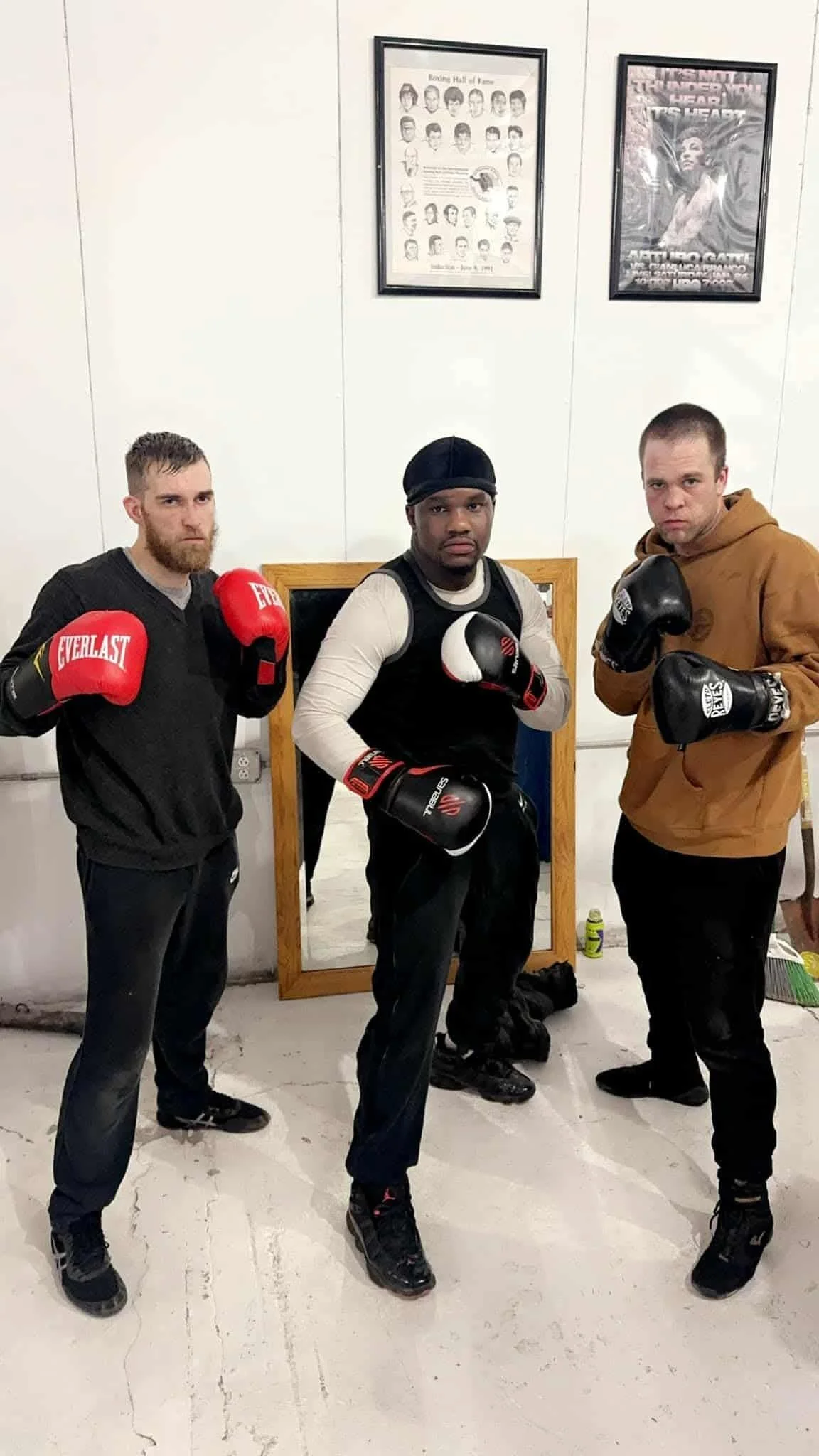
Once the profession is established, boxers and actors can start carving out a unique niche for themselves. Actors can be comedic or dramatic on stage and work on Broadway or in regional repertory theaters. Boxers, similarly, create unique fighting styles for themselves, like the brawlers, boxer-punchers, or swarmers, as well as larger-than-life personas for themselves to attract fans and potential sponsors. On the flip side, creating that niche can be very financially strenuous. Since neither profession is a typical 9-to-5 job with a steady work schedule and paychecks, they need an expansive professional network to book performances. Sometimes, actors take flexible jobs outside the industry to supplement their income, such as bartending or waiting tables, or, for boxers, working construction or other labor-intensive jobs to earn steady income while searching for opportunities in their off hours.
I talked about these parallels with a friend of mine, Johnny Stimley from Michigan City. For 20 years, he has been involved in the local Northwest Indiana boxing scene, serving as a referee, coach, boxing mentor, and corner man. When I asked him about these similarities, he said he saw them as well.
“They both involve performance that requires rehearsal (training) a command of stage presence,” said Stimley, “and the ability to improvise under pressure. For myself, it's a form of storytelling which captivates an audience with both physical and emotional displays.”
Stimley then told me a story about a match he saw where these parallels were on full display. Back in 1993, Stimley traveled to Las Vegas to watch a bout between flyweights Miguel "Little Hands of Stone" Cabajal and Humberto "Chiguita" Gonzalez, in a bout to unify the International Boxing Federation and World Boxing Council flyweight titles.
“Gonzalez was winning the early rounds by knocking Cabajal down in the 2nd and 5th round,” Stimley recounted, “Somehow, Cabajal battled back with a hard-fought 6th round. In the 7th round, Cabajal landed a perfect left hook, which took Gonzalez to the canvas, and he couldn't beat the count.”
“This was the 1993 fight of the year,” he continued, “This was almost like a theatrical performance in having a stage performance, audience engagement, and live performance aspect.”
Stimley then said something that, while I had heard before, sank in the moment he mentioned it. While boxing and theater share similarities, they both provide a positive outlet and a sense of community among peers.
“Just being involved in boxing or the arts provides our youth with structure and an outlet,” he said, “You don't have to become World Champ or win a Tony to have these two arts change your life. I have witnessed firsthand the impact it has on one's journey, if it's being a better student or person. I've seen these kids become lifelong friends and family.”
The worlds of sports and performing arts are both entertaining. It’s the element of risk, watching someone take a chance on a maneuver that will either benefit or hurt their chances of victory. It’s in the storytelling, the ability to convey a tale compellingly. The world of boxing straddles these worlds. A good fighter is an entertainer and an athlete. They must be fun to watch and willing to take risks. In the end, whether a fighter wins or loses, or when an actor finishes a performance, there’s one similarity that awaits them: the roar of the crowd.
Those interested in watching a match in Indiana can look them up at USABoxing.org for amateur bouts or, for professional matches, can keep watch at websites such in.gov/igc/athletic-division/athletic-events/.
Photo credit Johnny Stimley, photo of Zach Bartelheim ( Boxer and Michigan City High School Teacher) , Omar Od, and Taylor Moore.