
Mary Amador ROOTED IN FAMILY & ART
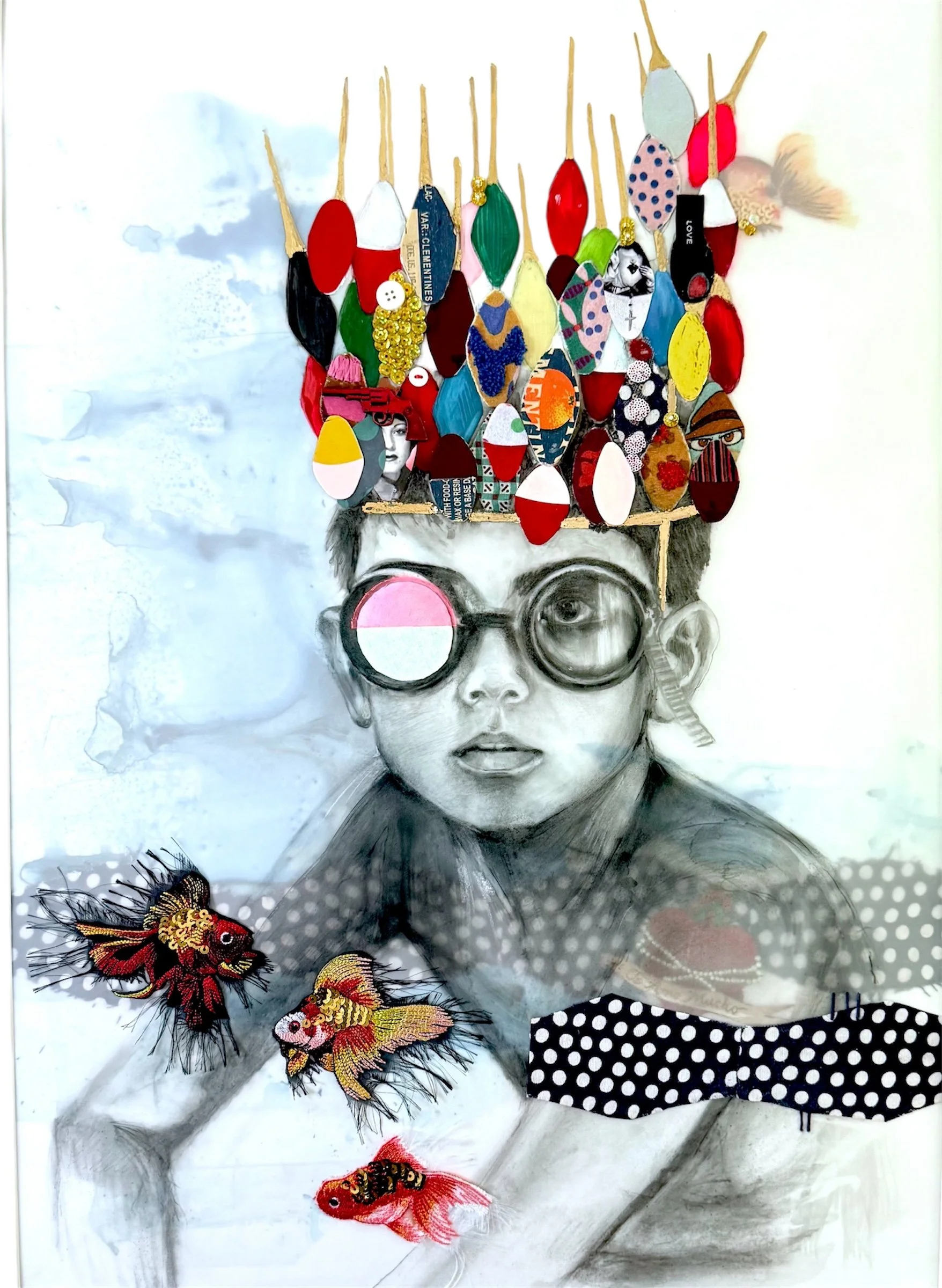
Holy Water, Little Fish
“I draw from my heritage, childhood memories, and faith, and my experience of motherhood,” Amador.
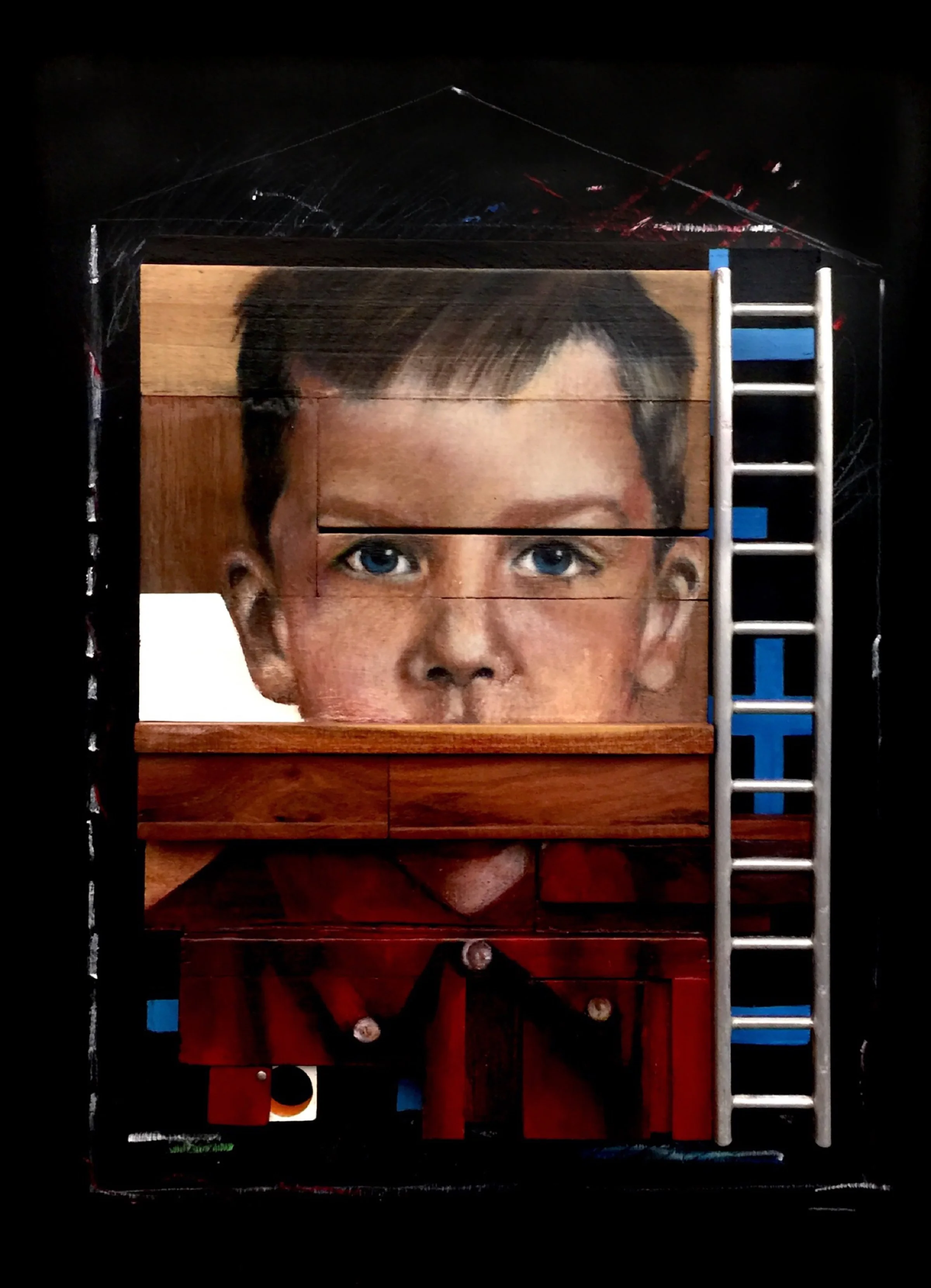
I made this for you
“My art explores how these shape identity and personal growth, with a focus on keeping the images honest and relatable.”
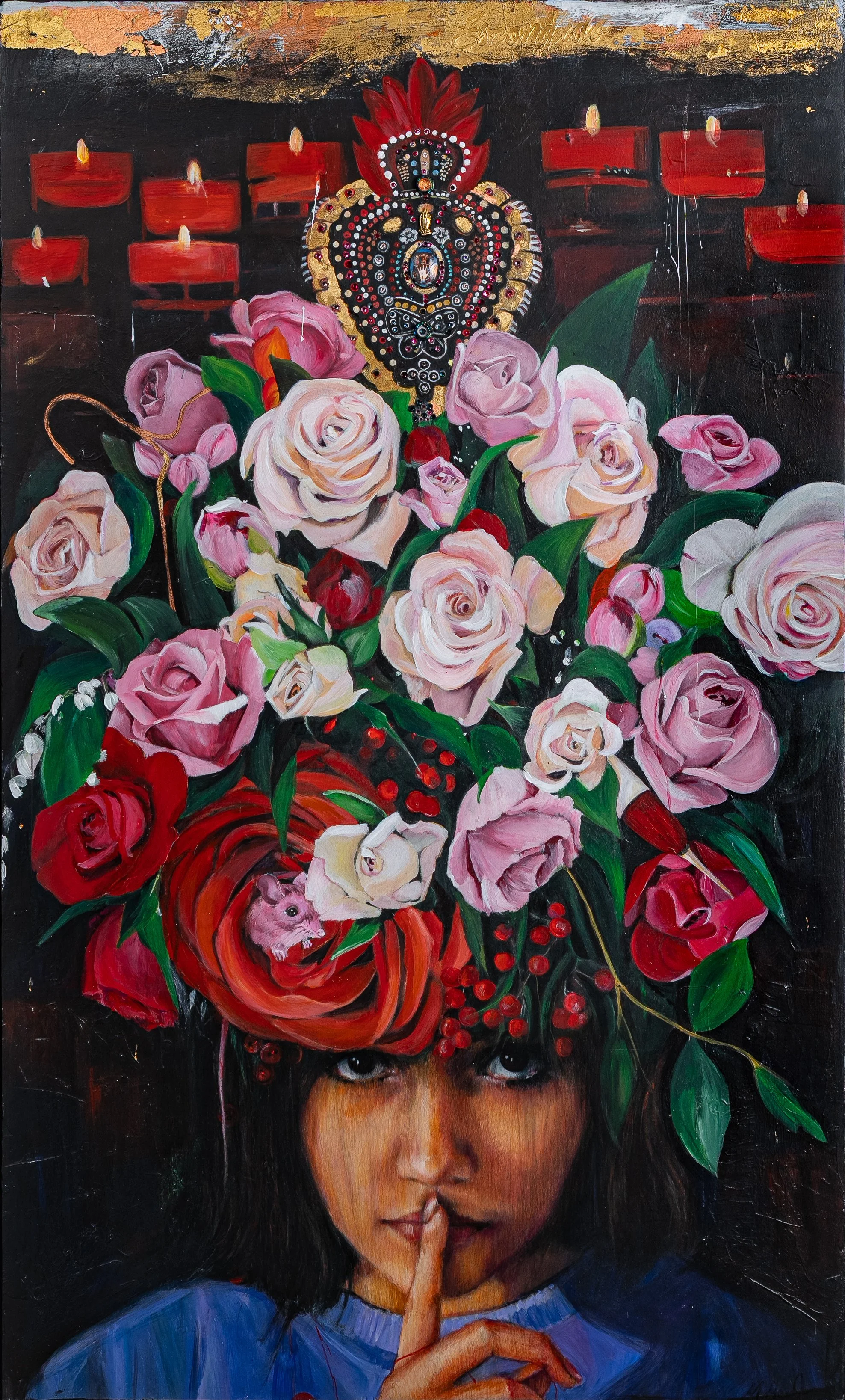
Her Hiding Place
By Cynthia Connell Davis
Mary Amador, who won Best of Show at the Box Factory show in mid-May, prefers to paint on wood panels. Her preference began when she was first looking for materials. She went to yard sales, expecting to find canvases. Instead, she discovered wood panels. “I like to have the wood grain showing through,” she says.
As we stand in line at the Electric Brew in Goshen, I ask her whether the human form is the most challenging subject for an artist. Her reply? “Yes, it is. I love facial expressions.”
In addition to colored pencils and acrylic on wood panels, she uses found objects, cross-stitched fabric, and threads in her paintings. She explains, “My mother was a huge seamstress.”
In her paintings, you will often see a red thread. She includes it for its deep meaning. The red thread of fate is an East Asian belief originating from Chinese and Japanese Mythology. Regardless of time, place, or circumstance, an invisible red string or cord links those destined to meet. It could be a soulmate, friend, or mentor. The thread may stretch or tangle but never break.
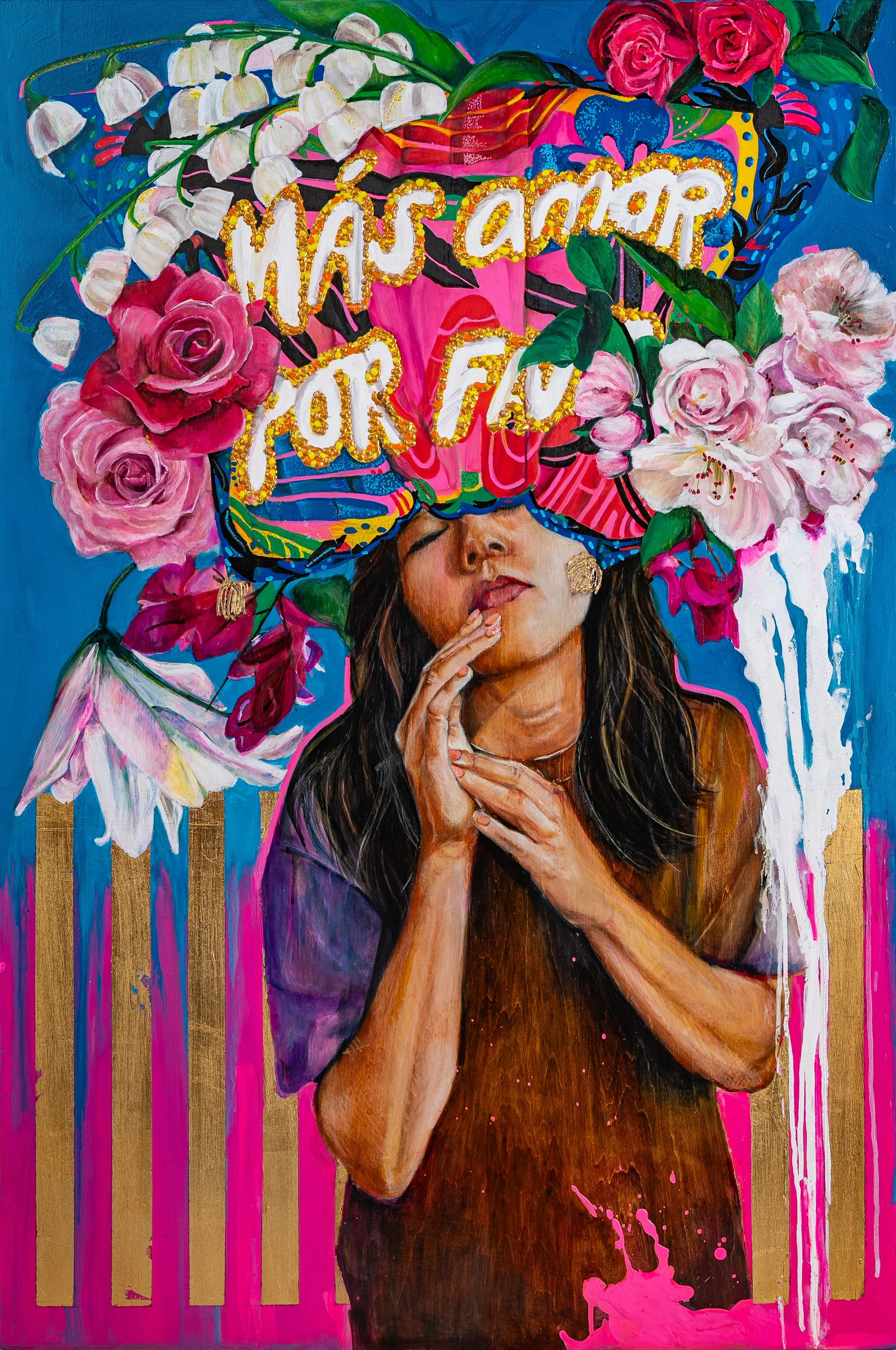
Mas Amor
Rooted in Family
Amador was born in Texas, but her family moved to Winona Lake, Indiana, when she was very young. With her parents, four sisters, and one brother, she lived in a two-bedroom house. Eight people in a small house meant that the children spent a lot of time outdoors, playing and often fishing.
She is of Hispanic background—her mother from Mexico, and her father from Texas. Her mother is a Roman Catholic. Amador grew up with the iconography that her mother brought into their home. However, the family attended church services and Youth Group at the Salvation Army. “It brings all kinds of people together. It provided opportunities, and it grounded me,” she says. Her sisters and brother all have college degrees and are doing well; however, they have gone different ways when it comes to religion. Amador, on the other hand, says, “Religion remains central for me.”
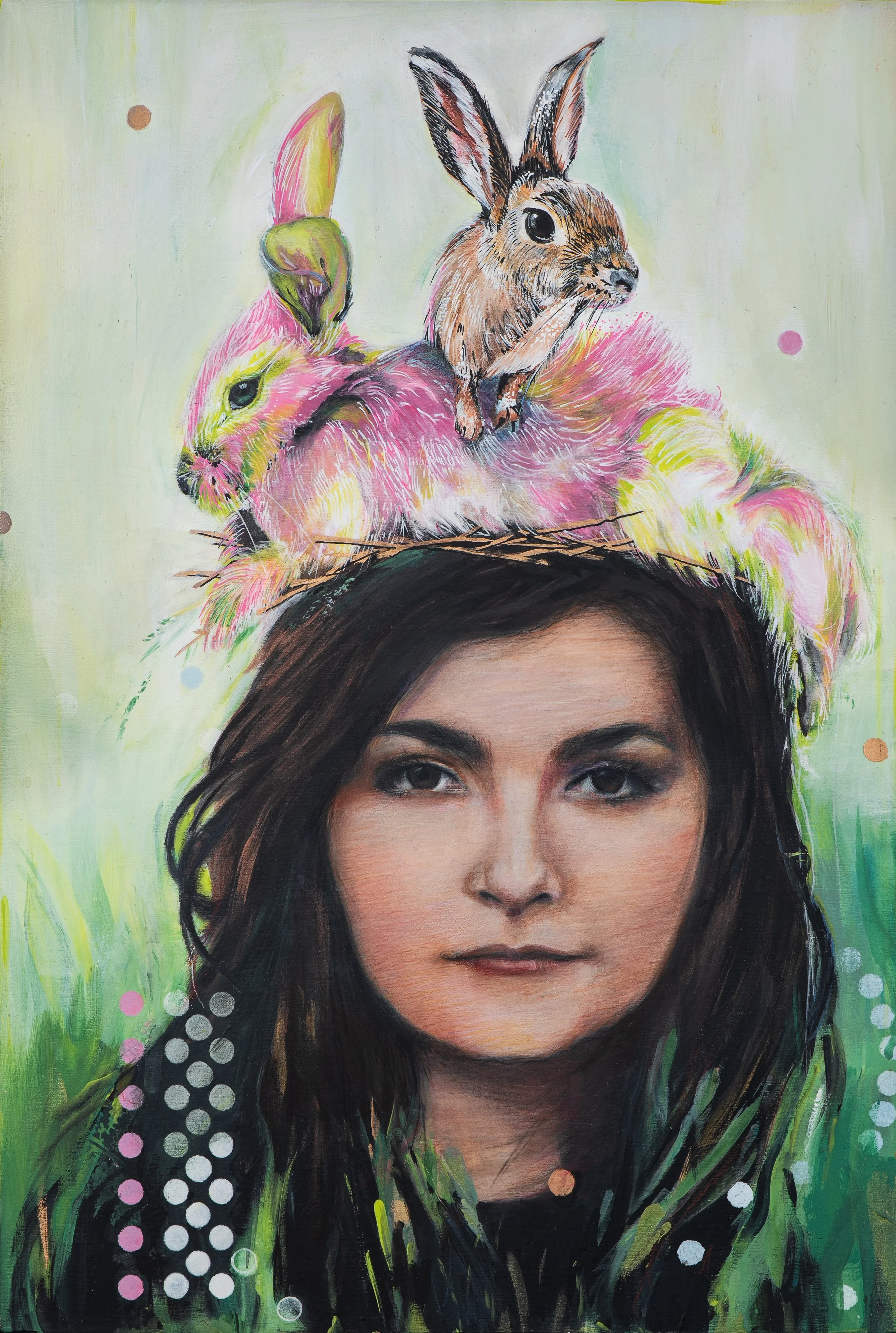
Quiet Choices
Her art is rooted in her family. She became seriously interested in art in Junior High. “My older sister was a great mentor in helping me with shading and value, and I felt I had some talent in that area.” She continued to study art in high school and college. She first attended Indiana University in Bloomington and then transferred to Herron School of Art (Indiana University’s Art School) in Indianapolis. “I transferred because I knew that I had to create daily, and that environment [Herron School] would provide that. The first year was all art. 8:00 a.m. to 4:00 p.m. classes every day.”
At Herron, she enjoyed doing gestural art, but after she graduated from Herron, she shifted to teaching. She was hired at Concord Junior High School. “Once I taught Junior High, there was no going back. I love that age. Junior High students will tell you the oddest things. They need encouragement.”
She was so absorbed in how to teach and serving her students that she left her own work behind for several years. Neil Boston, the other art teacher, was working on his own art there at school, between classes and on breaks. Even though his work is very different from hers, he encouraged and insisted that she paint. She credits Boston for pushing her to return to her own work.
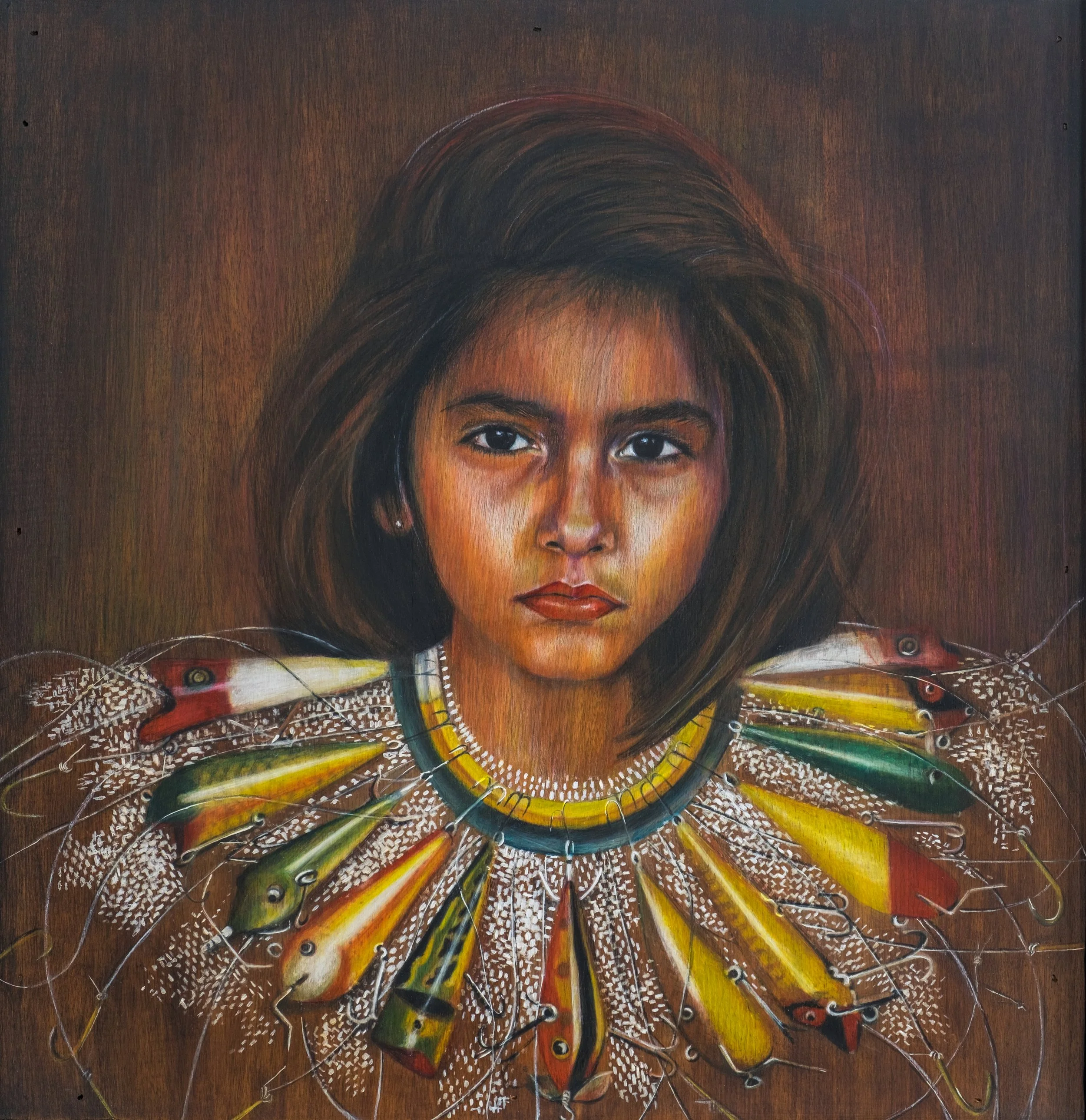
Lures and Lies
As she struggled to get back to her own art, Amador was keenly aware of the artist’s question, “What direction should I take?” Even though she had done gestural art at Herron, she found that gesture is large and takes a lot of time – time she didn’t have. She discovered she liked portraiture, which is tighter and smaller, more focused and detailed, than gesture.
Again rooted in family, she found inspiration in her children. “After I had children, I found out what I wanted to show. I could do it through my children.” Her son is now 23, and her daughter 21. But when they were small, she would have them pose for her. At first, they would smile broadly, as if for a photograph. But she would ask them to make facial expressions other than smiling. They quickly learned and “got really good at it.” They would say, “What do you need, Mom? Sad? Angry? Intense?”
Later, they teased her. “When we are seniors, all our [portraits] are going to be sad.”
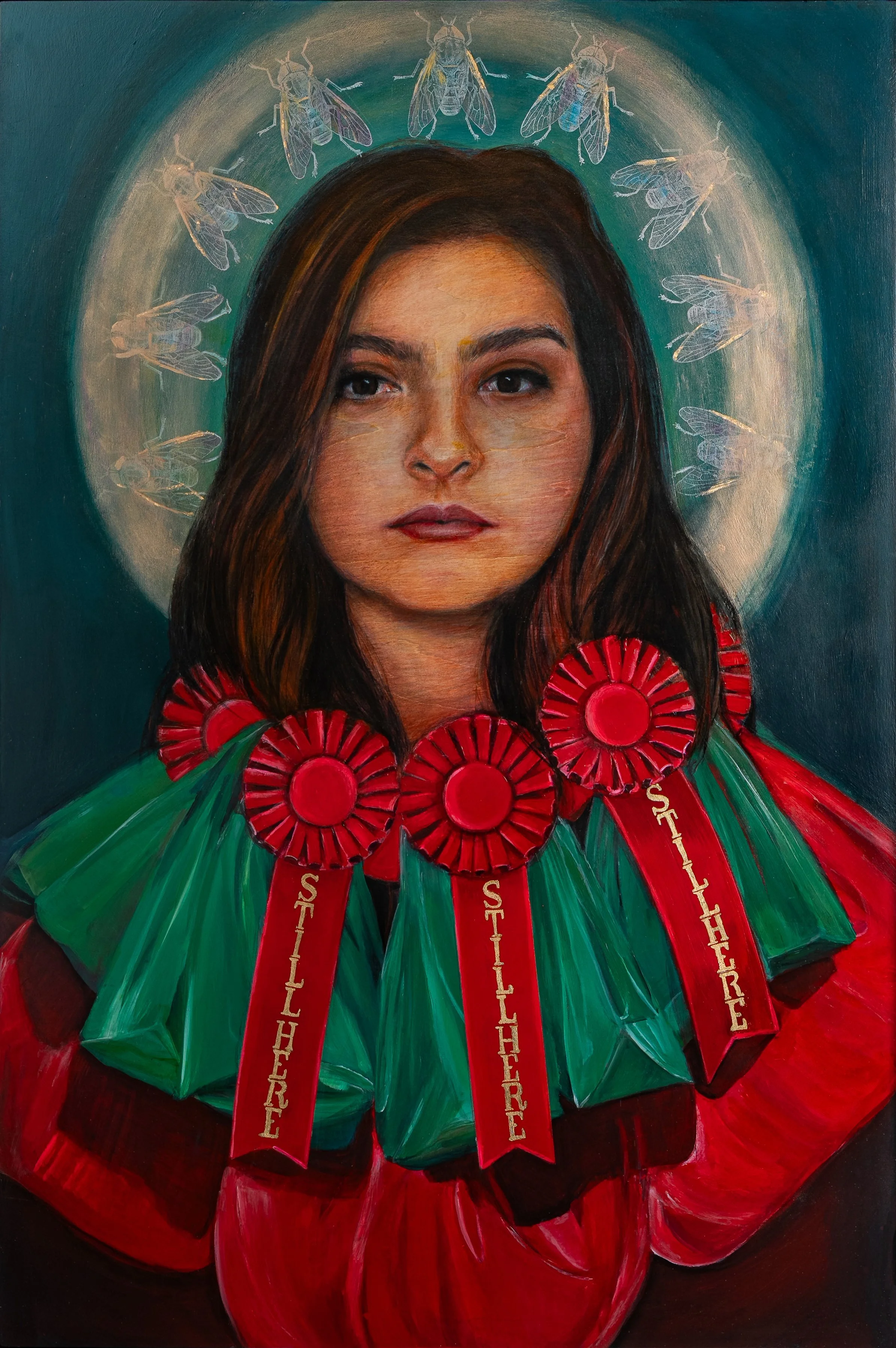
Still Here
….Never Finished
Like any artist, she feels a piece is never really finished. “I will create a stopping point, but I find myself walking by it and adding another stroke of paint or adjusting something small.
Emotionally, I try to make sure that it speaks to me. Is it conveying the message I wanted?”
Her work has appeared in small and juried shows, including the Midwest Museum of American Art, Elkhart; the Honeywell Center, Wabash; Art Link, Fort Wayne; and other small shows. Three times now she has won Best of Show at the Box Factory in St. Joseph, MI.

She Picked Oranges For Them, So They Could Pick Flowers For Her
Still rooted in family, she continues to need connection. “I have to have people. My brain just works that way.” After 32 years of working with students, Amador recently retired. Now she has the time to get back to gestural art. She and her best friend Heidi Bailey, whom she met at art school, talk on the phone every day. Even though Amador’s husband rolls his eyes, they sometimes talk for hours, encouraging each other to keep the discipline and do their artwork daily.
Even though she is no longer teaching, Amador has found that artmaking is not finished. She reflects: “I am a better artist because I taught. And I was a better teacher because I am a practicing artist.”
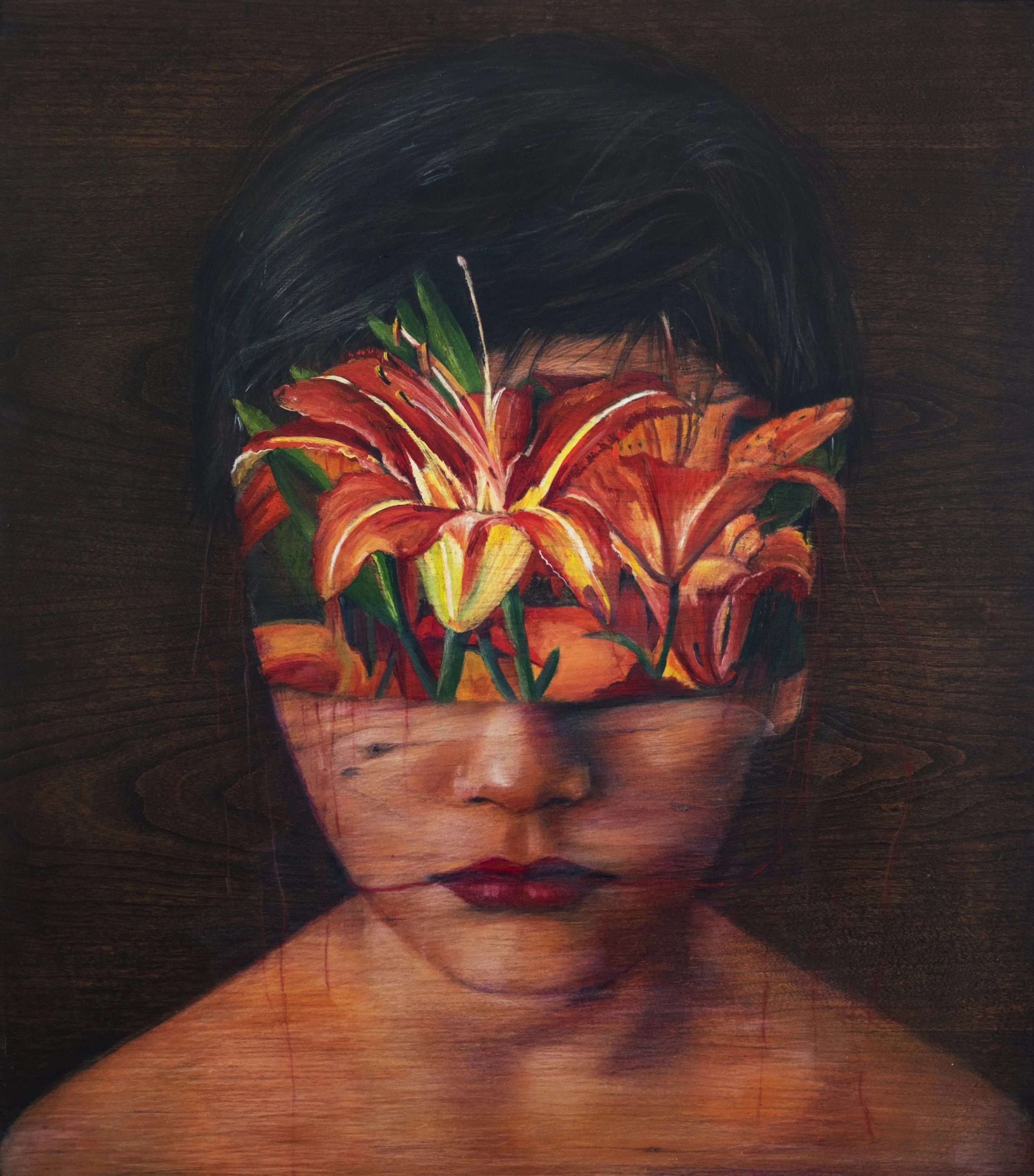
Thorns in the Memory